
Education 📍
📽️ Videos
New York School District Mapper
This interactive school district mapper allows you to search any New York State address and display the school district that the address resides within. You also drag and drop the balloon to see what school district an address is located within.
What New York State School District and BOCES District Am I Located In?
This tool will look up for any New York State address the School District and BOCES District that an address is located within.
The Rwandan Genocide and Learning in High School
Back in High School, I remember there being a lot of lectures on things that didn’t seem relevant to Modern America, much less the hick town I grew up. One of the things that I particularly remember learning about was the Rwandan Genocide and the Hutus and Tutsis in the Lake Region of Africa, which seemed far removed from rundown trailers with goats and smoldering burn barrels out back, the smells of manure and kerosene heating in the small towns in the foothills of the Catskills. At one level, you could understand the difference from the beef cattle grazers versus the dairymen, growing up in a small town, but it was still so distant from Africa.
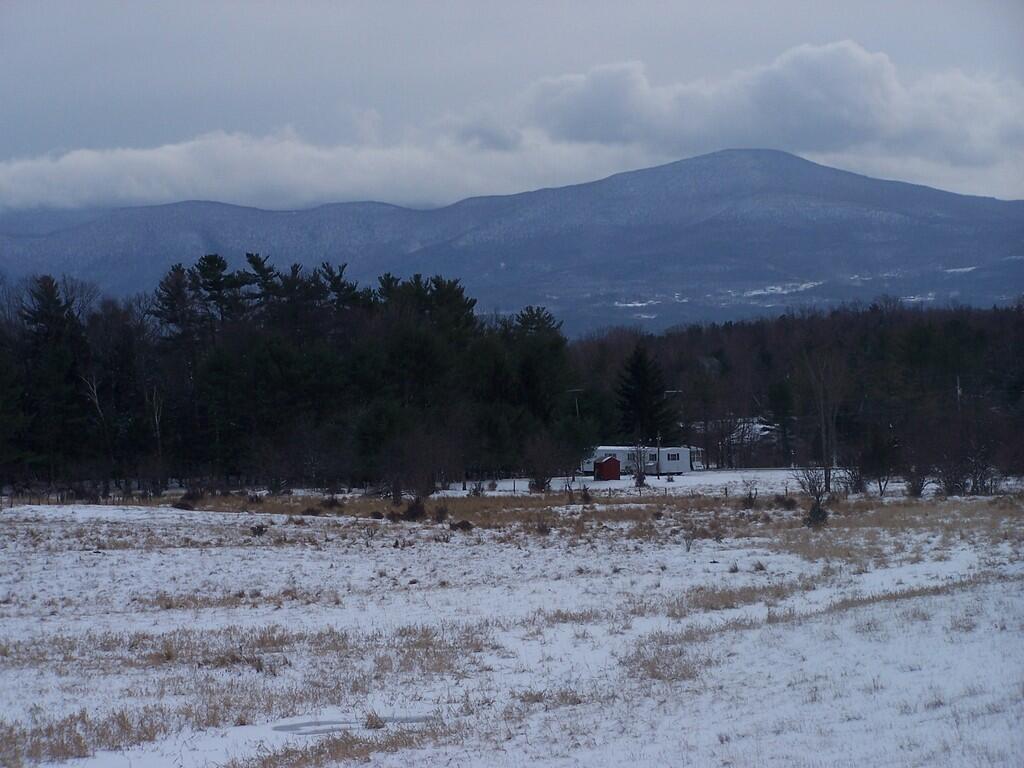
Still to this day, I felt like High School spent a lot of time talking about genocide and the holocaust and far away lands, but almost no coverage of contemporary American History or politics. George Washington and Abraham Lincoln, but nothing about Lyndon Johnson or Richard Nixon – much less George Bush or Clinton. Participation in Government, when I finally got to that class in High School seemed to be such a refreshing change compared to all the study of distant lands and culture far away from today. Maybe that’s why I ultimately decided on studying political science in college.


The truth is while the Rwandan Genocide was far removed from Greenville, it was still horrific, even if not exactly relevant to average kid growing up in a hick town.
An Overview of the Rwandan Genocide and the Hutus and Tutsis
The Hutus and Tutsis are two social and ethnic groups primarily associated with the African Great Lakes region, most notably Rwanda and Burundi. Though they are famously known for the horrific 1994 Rwandan Genocide, they are not separate races or tribes; they share the same language (Kinyarwanda/Kirundi), live in the same areas, and practice the same cultural and religious traditions.
1. Traditional and Pre-Colonial Shared History
Historically, the distinction between the two groups was defined more by socioeconomic class and occupation than genetics.
- The Hutus made up the vast majority (roughly 85%) of the population and were predominantly agriculturalists or farmers.
- The Tutsis made up a minority (around 14%) and were primarily pastoralists (cattle herders), warriors, and part of the ruling elite or monarchy.
- Social Mobility: Prior to European colonization, these categories were fluid. If a Hutu acquired significant cattle and wealth, they could become an “honorary Tutsi”. Intermarriage between the groups was also common.
2. Colonial “Divide and Conquer” Policies
The modern, rigid division between Hutus and Tutsis was engineered by European colonizers—first Germany (1885–1916) and later Belgium (1916–1962).
- The Hamitic Hypothesis: Employing racist pseudo-scientific methods, European colonial powers claimed that the taller, thinner Tutsis were racially superior and descended from Ethiopian elites.
- Institutional Favoritism: The Belgians institutionalized this hierarchy by excluding Hutus from higher education, administrative jobs, and leadership, fueling deep resentment among the Hutu majority.
- Identity Cards: In 1932, the Belgian administration introduced mandatory ethnic identity cards. This completely halted social mobility and fixed a person’s ethnic label from birth.
3. The Shift to Violence and Power Struggle
As African nations began fighting for independence in the late 1950s, the political dynamic inverted.
- The 1959 Revolution: Sensing the shift in global politics, Belgian authorities abruptly switched their allegiance to the Hutu majority. A violent Hutu uprising overthrew the Tutsi monarchy, resulting in the massacres of tens of thousands of Tutsis and forcing hundreds of thousands more into exile in neighboring countries.
- Post-Independence Tensions: When Rwanda gained independence in 1962, a Hutu-led government took control. Exiled Tutsis formed a rebel military group in Uganda called the Rwandan Patriotic Front (RPF). In 1990, the RPF invaded Rwanda, sparking a bitter civil war.
4. The 1994 Rwandan Genocide
The ethnic tension culminated in one of the darkest chapters of the 20th century.
- The Catalyst: On April 6, 1994, a plane carrying Rwandan President Juvénal Habyarimana (a Hutu) was shot down. Hutu extremists immediately blamed the Tutsis.
- The Slaughter: Over a span of roughly 100 days, state-backed Hutu militias (the Interahamwe) systematically murdered an estimated 800,000 to 1 million people—primarily Tutsis, but also politically moderate Hutus who refused to participate. Neighbors turned on neighbors, heavily incited by hate propaganda from local radio stations.
- The End of the Genocide: The genocide concluded in July 1994 when the Tutsi-led RPF, commanded by current Rwandan President Paul Kagame, captured the capital city of Kigali and overthrew the extremist regime. Fearing retribution, over 2 million Hutus fled the country into neighboring Zaire (now the DRC), sparking an ongoing humanitarian and military crisis in central Africa.
5. The Debate Over US Involvement
The debate regarding United States involvement in the 1994 Rwandan Genocide centers heavily on the tension between moral obligation and post-Cold War political caution. While the Clinton administration initially faced immense criticism for its passivity, the debate has evolved over the decades into a broader geopolitical case study on humanitarian intervention, international law, and global responsibility.
| Aspect | Arguments for Non-Invention (The US Stance at the Time) | Arguments for Intervention (The Critical Counter-Perspective) |
|---|---|---|
| The “Somalia Syndrome” | The US had just lost 18 soldiers in the disastrous 1993 Battle of Mogadishu (Somalia). Public and congressional appetite for African peacekeeping missions was virtually non-existent. | The US failed to separate a chaotic, hostile urban battle in Somalia from a highly structured, state-sponsored genocide against unarmed civilians in Rwanda. |
| Legal Semantics | Under the 1948 UN Genocide Convention, a formal declaration of “genocide” legally obligates signatories to intervene. US officials strictly ordered staff to use phrases like “acts of genocide” to avoid this legal trigger. | Intellectuals and human rights groups argue that hiding behind semantic loopholes undermined the spirit of international human rights law and cost nearly a million lives. |
| National Interest | From a realist foreign policy perspective, Rwanda possessed no strategic minerals, oil, or critical geographic value to US national security. | Critics argue that global stability and stopping mass atrocities constitute a core moral national interest for a global superpower. |
| Intelligence Discrepancy | Declassified documents show some officials claimed confusion over whether the violence was a continuation of the civil war or an ethnic slaughter. | Extensive intelligence briefings, including early warnings from UN Commander Roméo Dallaire, proved the administration knew a systematic extermination was occurring. |
6. What the US Did in Rawanda
Instead of putting boots on the ground, the US government took diplomatic actions that inadvertently slowed down the international response:
- Blocking UN Reinforcements: The US used its veto power on the UN Security Council to successfully demand that the UN peacekeeping force in Rwanda (UNAMIR) be drawn down from over 2,000 troops to just a few hundred.
- Refusing Technology Jams: The Pentagon rejected requests to jam the Radio Télévision Libre des Mille Collines (RTLM)—the hate radio station broadcasting the coordinates of Tutsis in hiding—citing concerns over high costs and free speech laws.
- Late Humanitarian Aid: The US only mobilized significant resources after the genocide ended, providing millions of dollars in aid to the massive refugee camps that formed in neighboring Zaire (now the DRC).
7. The Shift in Public Discourse and Legacy
The domestic and international debate surrounding this failure significantly altered how the world approaches humanitarian crises.
- The Clinton Apology: In 1998, President Bill Clinton traveled to Kigali, Rwanda, and delivered what became known as the “Clinton Apology.” He acknowledged that the international community and the US failed to act quickly enough, stating, “We did not act quickly enough after the killing began… We must ignore those who say these brutal conflicts are ethnic and therefore incurable.”
- The “Responsibility to Protect” (R2P): The policy failure in Rwanda directly inspired the United Nations to adopt the Responsibility to Protect (R2P) doctrine in 2005. This global political commitment establishes that if a sovereign state fails to protect its citizens from mass atrocities, the international community has a collective responsibility to intervene.
- Modern Precedent: Today, whenever the US debates intervention in global conflicts—from Libya and Syria to modern-day crises—the failure in Rwanda is consistently invoked by interventionists as the ultimate warning of what happens when the international community decides to do nothing.
8. Today in Rawanda
To heal the wounds of the past and prevent future violence, the post-genocide Rwandan government strictly banned the use of the ethnic labels “Hutu” and “Tutsi”. National identity cards no longer list ethnicity, and the government has legally prohibited speech that promotes ethnic division. Today, citizens are legally and socially encouraged to identify strictly under a single, unified national identity: Rwandan.
NYS School Districts
Data Source: NYS Department of Education. NYS Schools and School District Boundaries. https://gis.ny.gov/gisdata/inventories/details.cfm?DSID=1326