![Untitled [Expires September 10 2024]](https://www.andyarthur.com//data/photo_005431_large.jpg)
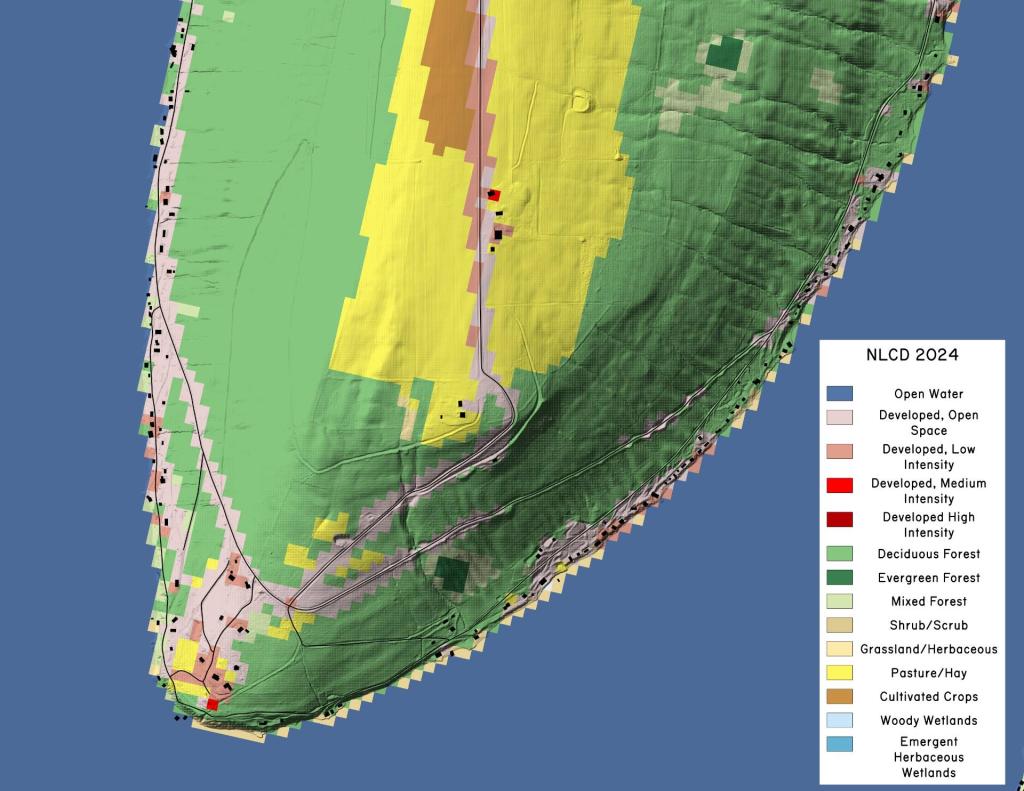
Most Agricultural Town in New York State
What town has the largest percentage of land cover used for agricultural purposes? Town of York in Livingston County - 9.1 percent is hay/pasture, 62.8 percent is cropland making it the state's town with the most agriculture as a percentage of area.
![Most Agricultural Town in New York State [Expires September 29 2025]](https://www.andyarthur.com//data/photo_018513_large.jpg)
It’s not all silage in New York
You might be tempted to think most corn in New York is planted for dairy silage. And it’s true New York has a lot more corn planted for silage – 45% in New York versus 6% nationally, it’s more corny then you might think.

The Great Split: Silage vs. Grain
The first and most critical decision a New York farmer makes is whether to harvest the corn as silage or grain. This choice shapes the landscape of the state’s agriculture, splitting New York’s million-plus acres of corn nearly down the middle.
Roughly 45% of New York’s corn acreage is dedicated to corn silage. Because New York is a powerhouse dairy state, cows require massive amounts of high-quality forage. To make silage, heavy machinery chops the entire plant—stalk, leaves, and ear—while it is still green and holding about 65% moisture. This material is packed tightly into bunkers or massive plastic bags to ferment, creating a highly nutritious, easily digestible feed that sustains dairy herds through the Northeast winters.
The remaining 55% of the corn is left in the fields longer, allowing the plants to dry out naturally so the ears can be harvested strictly for their grain.

The Grain Dilemma: Dry-Shelled vs. High-Moisture
Once a farmer commits to harvesting for grain, they face another crossroads dictated by weather, infrastructure, and their end market. This grain harvest breaks down into two primary categories:
- Dry-Shelled Grain Corn (70% to 80% of grain acreage): This is the cash crop of the grain world. Harvested when the kernels reach about 18% to 23% moisture, this corn is run through commercial, high-speed dryers to bring the moisture down to a stable 15% or lower. Once dried, it can be safely stored in standard aerated grain bins for over a year, sold on the open market, or trucked to commercial feed mills and ethanol plants.
- High-Moisture Grain Corn (20% to 30% of grain acreage): Utilizing a uniquely regional strategy, many New York farmers bypass the dryer altogether. They harvest the grain at a wetter stage—typically 24% to 35% moisture—and grind or store it directly in airtight silos. The high moisture allows the grain to ferment. For a dairy farmer, high-moisture corn is a double win: it eliminates expensive propane drying costs and provides a feed that cattle can digest more efficiently.

The Death of the Corn Crib: Why Everything is Combined
For those who picture rustic, slatted wooden corn cribs filled with golden ears of corn drying in the autumn wind, modern statistics offer a reality check. Today, virtually 100% of commercial dry shelled grain corn is combined directly in the field. Storing dry grain on the cob has been entirely phased out of commercial agriculture.
The shift away from storing ear corn comes down to sheer physics and economics. A modern combine harvester strips the kernels cleanly off the cob right in the field. This means trucks only haul the high-value grain, completely bypassing the need to transport heavy, bulky cobs. Furthermore, ear corn takes up exactly twice the physical volume of shelled corn per bushel. In a modern agricultural economy, building enough physical infrastructure to store millions of bushels of bulky ear corn is a financial impossibility.
The only time a cob ever makes it into a New York storage facility today is in the form of “earlage” or “snaplage.” In these specialized operations, dairy farmers use a forage harvester to chop the grain, cob, and husk together. However, just like silage, this is a wet, fermented feed option meant for immediate on-farm use, not the dry cash-crop market.
![Standing Corn [Expires November 20 2025]](https://www.andyarthur.com//data/photo_019608_large.jpg)
A Masterclass in Efficiency
The way corn moves through New York State is a testament to the hyper-efficiency of modern farming. From the instant optimization of the combine harvester to the calculated chemistry of fermented dairy feed, nothing is left to chance. The next time you pass a New York corn field in the fall, you aren’t just looking at a crop—you are looking at a highly sophisticated supply chain at work.